
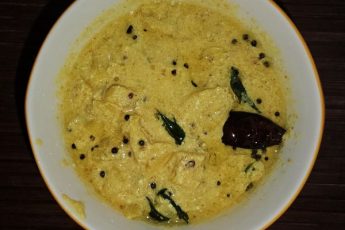
Kerala Fish Curry With Roasted Coconut
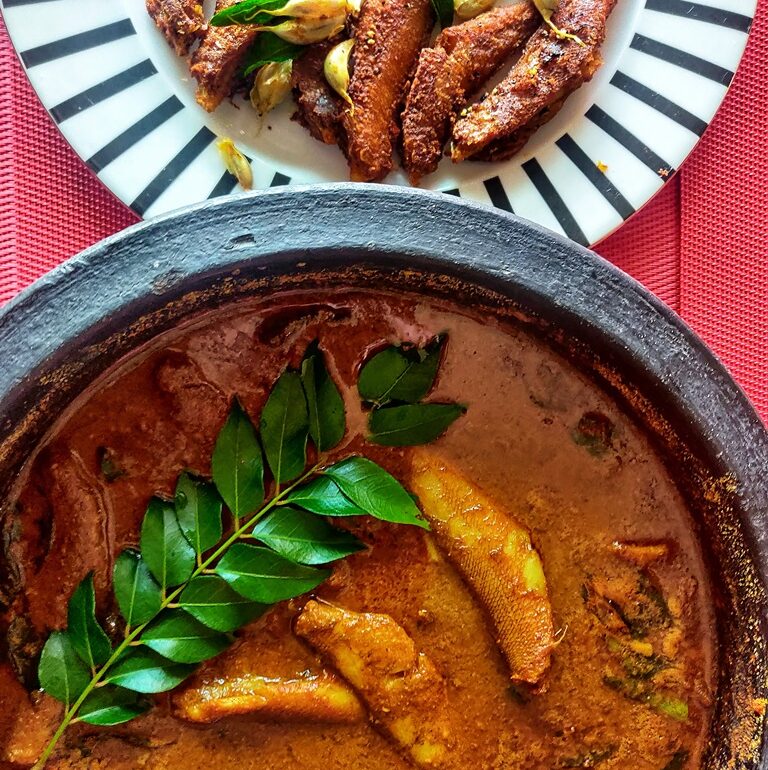
Kerala Fish Curry with roasted coconut, known as Thenga Varutharacha Meenkari in Malayalam, is an easy-to-cook fish curry recipe that is mildly spiced and best paired with red boiled rice (matta rice).This fish curry requires just a few ingredients like shallots, ginger, coconut, coconut oil, curry leaves, and green chillies. The malabar tamarind (kudampuli) is the star ingredient that lends the fish curry its tangy flavour. This tamarind needs a special mention due to its unique properties. It is not only a souring agent but also has medicinal value. Research proves that it not only reduces inflammation in the body but also lowers blood sugar levels and cholesterol.This is a healthy fish curry preparation, for it is traditionally slow-cooked in an earthen pot or clay pot (Manchatti in Malayalam). It is believed that a fish curry cooked in an earthen pot tastes better and authentic as the pot accentuates the curry's flavour. The earthen pot is made of clay that is alkaline in nature. This helps in neutralizing the acidity in our body, which in turn aids in digestion. No toxic or chemical materials are used in the making of a clay pot.The roasted coconut lends the curry a mild, creamy, and smoky taste that helps the fish pieces absorb the unique flavours of all ingredients used in the curry.This fish curry is also popularly paired with steamed tapioca (the famous kappa-meen curry, which is a staple food of many Malayalis). If you are a fish-lover, this recipe is a must-try and you won't be disappointed.
Equipment
- 1 Deep pan or earthen cooking pot
- 1 Frying pan
Ingredients
- 12 nos. Ladyfish (Kane fish)
- 1 tsp Turmeric powder
- 2 tsps Chilli powder
- 1 tsp Rock salt or salt as per taste
- 4 nos. Green chillies
- 1 tbsp Ginger (thinly sliced)
- 2 tbsps Coconut oil
- 4 nos. Malabar tamarind/Kudampuli (soaked in water)
- ¼ tsp Roasted fenugreek powder
- 12 nos. Curry leaves
- 2 cups Water
For Roasting and Grinding
- 1 cup Grated coconut
- 3 nos. Shallots
- 2 tsps Coriander seeds
Instructions
- Wash and clean fish thoroughly. In a pan, marinate the fish with turmeric powder, chilli powder, and rock salt. Wash and soak Malabar tamarind in fresh water for 1 hour. Do not throw discard the water that is used for soaking. Use the water and the tamarind in the curry.
- Grate half a coconut (1 cup). In a pan, pour 1/2 tsp of coconut oil. Add the grated coconut, shallots, and coriander seeds. Dry roast it on a low flame till the coconut turns light golden brown.Switch off the stove and let the coconut mixture cool. Once cool, grind it to a fine paste by adding 1/4 cup of water.
- Next, transfer the marinated fish into an earthen cooking pot or deep pan. Add the soaked Malabar tamarind pieces with water. Add sliced ginger, green chillies, ground coconut paste, and 2 cups of water. Mix gently.
- Let the fish boil for 5 to 8 minutes on a low to medium flame. Do not overcook the fish, or else it will disintegrate in the curry. Switch off the gas stove.Add curry leaves and roasted fenugreek powder. Lastly, drizzle 1 tbsp of coconut oil over the fish curry.Do not use a ladle to mix the curry as it may break the fish pieces. Instead, hold the pan and tilt it gently in all directions to blend completely. Close the lid and let it sit for a while for the flavours to set in before serving.
- Before serving, if necessary, you can discard the tamarind pieces from the curry using a spoon, as the tamarind may increase the sourness in the curry. If you prefer your curry to be tart, you can retain one piece of tamarind in the curry. Malabar tamarind is also a natural preservative and helps to lock in the flavours of the curry.
Notes
Any variety of fresh fish can be used for this preparation.
Fish cooked in an earthen pot (manchatti) tastes very flavourful as it releases its unique flavours.
Use shallots (pearl onions) to retain the authentic taste of the curry.
Always use coconut oil for Kerala-style preparations to get traditional and unique flavours.
Use roasted fenugreek powder sparingly (as per the recipe) for a balanced flavour. Too much of it can make the curry bitter.
One important tip is: When the fish curry is ready, let it rest for at least an hour before serving. This allows the flavours to settle well.
It is a known fact among fish lovers that a fish curry tastes better the next day. This is because the sauces in the curry thicken and the spices settle, thereby enhancing its taste.
When you take out the curry the next day for serving, remove only the required quantity. Thaw the curry first and then reheat it. Just heat it and don't boil it. When the fish curry is thawed, there is no need to reheat it for longer than 1 or 2 minutes.
 Hello, my name is Sunita Nayr. I am a food blogger living in Mumbai, India. This is my blog, where I post my favourite recipes.